
Franklin County Sex Offender Checks
The Idaho Central Sex Offender Registry is the official public search. Idaho State Police BCI runs it with data from county sheriffs, IDOC, and the Idaho Department of Juvenile Corrections. Franklin County Sheriff performs local registration and verification. No separate Franklin County registry app was found.
Begin with a county search for a broad local list. Use name search when enough identifiers are known, and use map or subscription tools for address awareness. Repeat a map search by county, city, or ZIP because some addresses do not map.
Five Franklin County Registry Search Modes
The official interface has separate name, city, county, ZIP, and map tabs. Each offers an Adult or Juvenile database choice. County mode scans Franklin County, while map mode checks a set radius from an address.
The official registry search shows those choices.
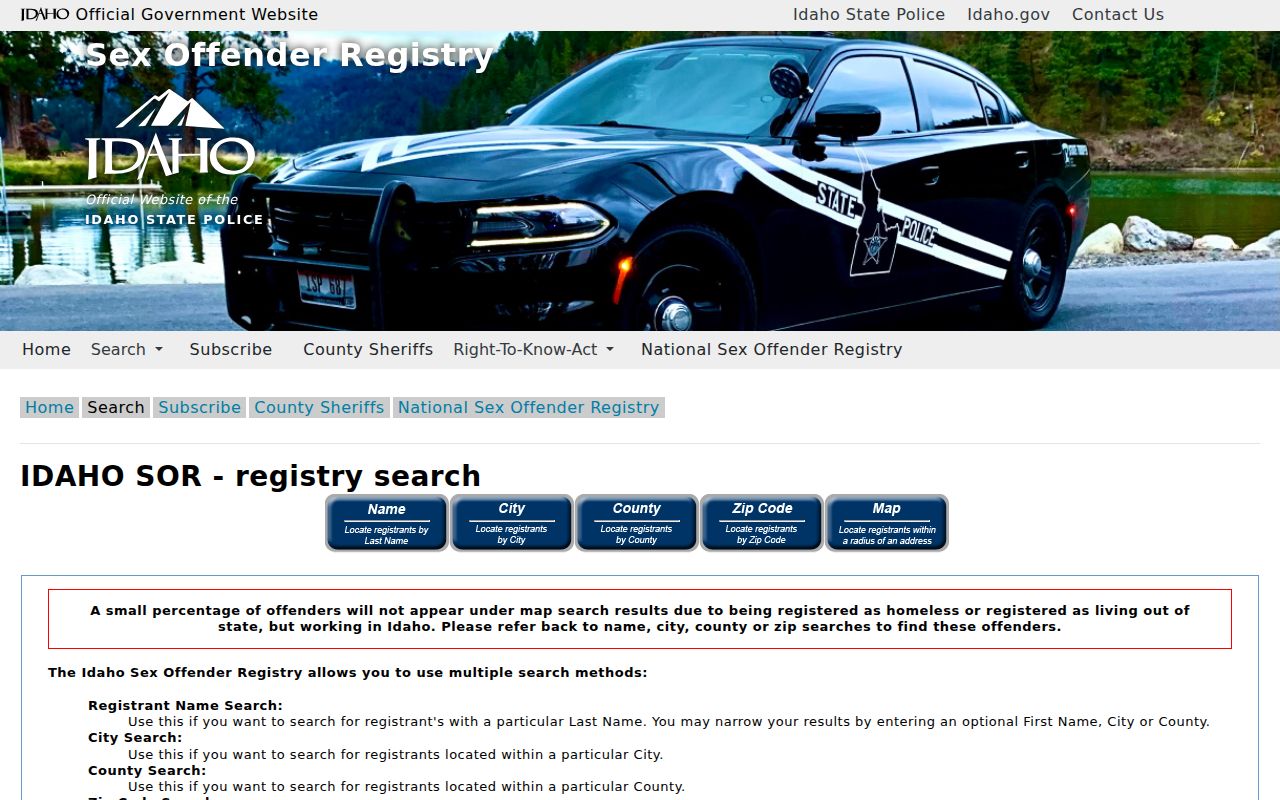
The tab layout keeps each method distinct and lets readers switch between adult and juvenile databases.
Idaho Central Sex Offender Registry Searches
The registry is free and needs no login after the conditions are accepted. Choose the method that fits the known facts. Results are candidate matches, not fingerprint identification.
- Open the official registry and accept its published warnings.
- Choose name, city, county, ZIP, or map, then select Adult or Juvenile.
- Enter required fields and choose Franklin when county mode applies.
- Review identifiers, status, and verification agency before relying on a profile.
| Field Label | Type | Required | Notes |
|---|---|---|---|
| Last Name | Text | Name mode | Maximum 30 characters; first name is optional |
| City | Select | City mode | Also a name-search filter |
| ZIP Code | Text | ZIP mode | Adult or Juvenile database |
| County | Select | County mode | Choose Franklin |
| Address and radius | Map | Address and city | Idaho; 1, 3, or 5 miles |
Franklin County Registry Map Blind Spots
Google pins do not include every registrant. The registry notes that a small share may be left off a map, including some people without a fixed residence and out-of-state residents who work in Idaho. A clear map is not a clear county search.
Repeat the work by county, city, and ZIP. If an address or status looks wrong, report it to the verification sheriff named in the entry rather than confronting the person.
Name, city, county, and ZIP searches return candidate lists, while the map uses pins. Quick links identify Violent Sexual Predators, Non-Compliant Offenders, and Pending status. Pending describes processing, and non-compliant describes a registration-duty status. Neither states that a new offense occurred.
Registry Profiles: What They Show
Public Franklin County profiles show identity, location, offense, and status fields authorized by Idaho law. They exclude Social Security and driver's license numbers, telephone numbers, online identifiers, and law-enforcement-only data.
| Name & Aliases | Current name, prior names, aliases, and date of birth. |
|---|---|
| Photo & Physical Description | Current public photograph and identifying details. |
| Registered Address | Residence, habitual location, and certain temporary lodging. |
| Offense & Statute | Registerable offense and place of conviction. |
| Idaho Designation | Adult, violent sexual predator, or juvenile context. |
| Registration Status | Verification agency and pending or non-compliant status. |
Franklin County Address Alerts
The Subscribe tab accepts street address, city, ZIP, email twice, and a 1-, 3-, or 5-mile radius. It can email a subscriber when a registrant moves into or out of the chosen area. This is Franklin County's official proximity-alert route because the sheriff publishes no separate app.
An alert describes registry movement, not a new criminal allegation. Pending and non-compliant are also registration statuses, not claims of new convictions.
Combine an alert with a periodic Franklin County search. Alerts depend on the address and email entered, while county mode does not depend on a map pin. Near the Utah boundary, a national search adds other jurisdictions. Each result still needs review in the registry that published it.
Registration Levels and Duties in Idaho
Idaho does not publish Tier I, II, and III labels with 10-, 25-, and lifetime terms. It distinguishes ordinary adult registrants, judicially designated violent sexual predators, and a separate juvenile database. Adult registration is generally lifetime, subject to the limited petition route in Idaho Code §18-8310.
| Level / Tier | Duration | Verification Frequency |
|---|---|---|
| Ordinary adult registrant | Generally lifetime, limited petition route | Generally annual |
| Violent sexual predator | Lifetime framework | Quarterly |
| Juvenile registry | Case-specific rules | Adult schedule does not apply automatically |
Registering with Franklin County Sheriff
Local registration and verification take place at the Franklin County Sheriff, 39 West Oneida in Preston, 208-852-1234. Appointment hours and local fees were not posted, so call first. State technical help is available from ISP registry staff at 208-884-7305 or idsor@isp.idaho.gov.
The sheriff is also the first error contact when named as verification agency. Only fingerprints reliably tie a person to a record. Similar names and dates can mislead.
A public profile may show names and aliases, date of birth, photograph, physical description, residence or habitual location, student data when applicable, offenses, conviction place, verification agency, and status. Vehicle, employer, scars or tattoos, and victim-age fields were not confirmed, so readers should not expect them.
Violent sexual predator status comes from a judicial designation and brings quarterly verification. An ordinary adult registrant generally verifies once each year. The designation is not federal Tier III shorthand. Juvenile registration follows separate rules and should not inherit the adult duration table by assumption.
Using Registry Information Lawfully
Registry information supports family and neighborhood safety planning. The National Sex Offender Public Website adds a cross-state layer useful near Utah. Confirm a Franklin County result in Idaho's registry and with the listed verification agency.
Misuse is unlawful: Harassment, intimidation, or criminal use may be prosecuted under Idaho Code §§18-8326 or 18-8413 and may create civil liability. Section 74-120 forbids commercial use and telephone or mailing-list compilation.
The official registry warning states the terms before access.
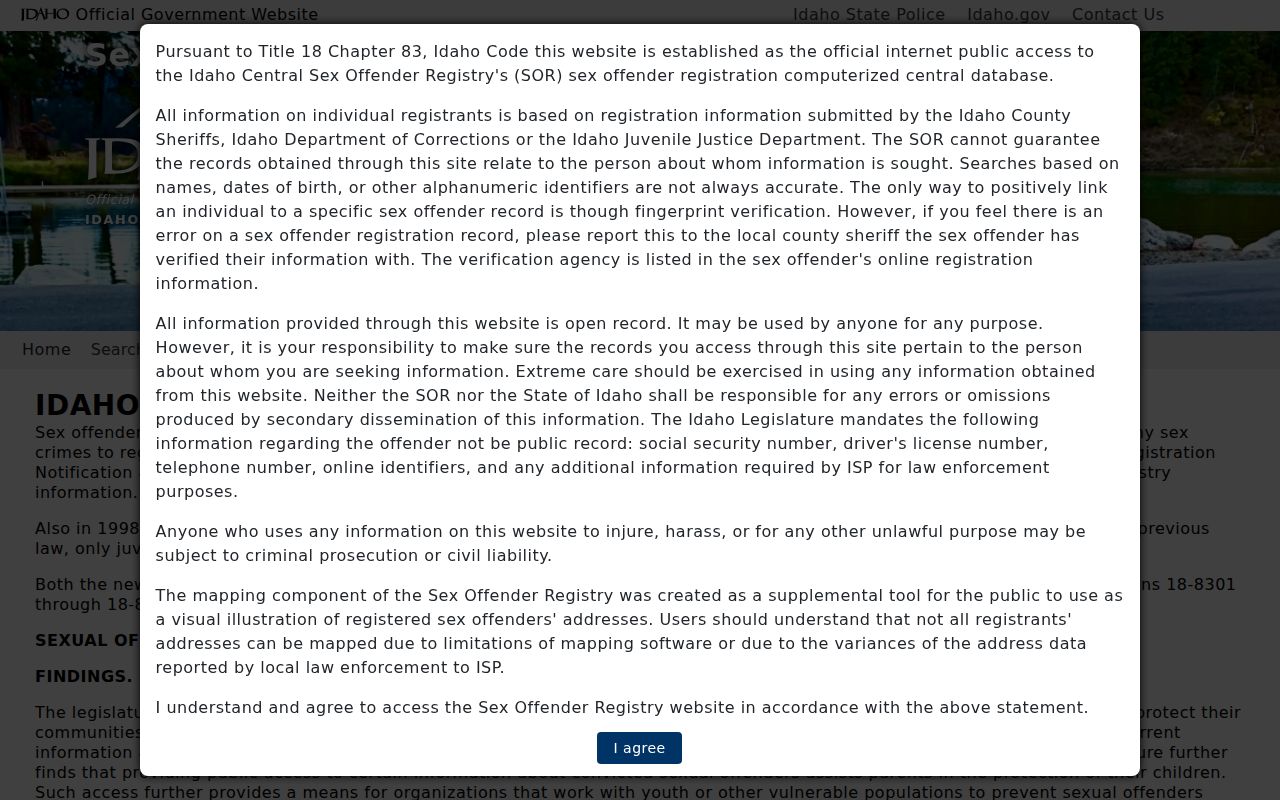
Those terms preserve access while warning against misuse.
The national registry portal supplies the cross-border layer.
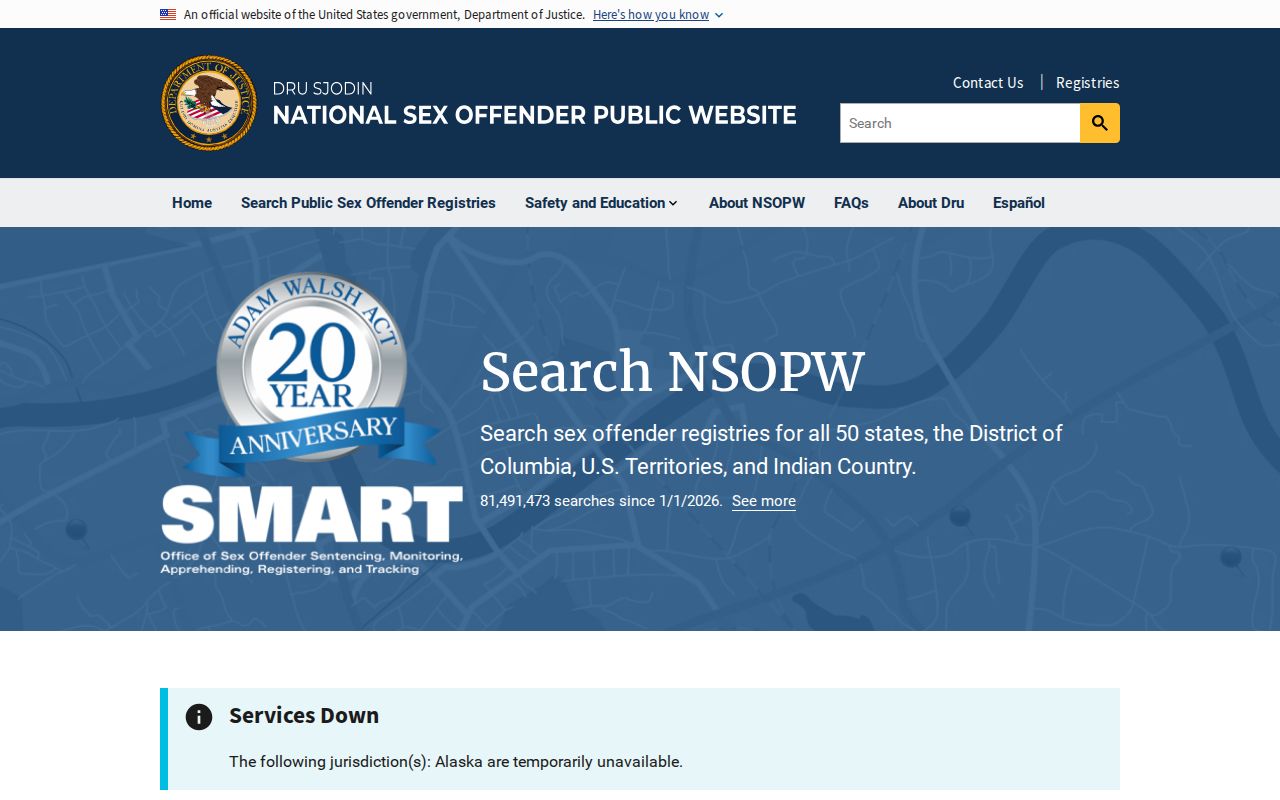
Use it as an added jurisdictional search, not a substitute for Idaho verification.
Franklin County Name Match Limits
The ISP registry warns that name, date-of-birth, and alphanumeric matching is not positive identification. Only fingerprints reliably establish that link. Compare the full public profile and its verification agency, then report a suspected error through the sheriff or ISP registry staff. Do not publish, confront, or accuse someone based on a similar name or an incomplete map result.
The error route depends on the profile. Contact the verification sheriff shown in the entry when a local address, status, or identity field appears wrong. Franklin County Sheriff can be reached at 208-852-1234. For a portal or statewide registry issue, ISP lists 208-884-7305, fax 208-884-7193, and idsor@isp.idaho.gov. Give staff the public record details needed to locate the entry, not a broad accusation.
Quick lists also require restraint. “Pending” can reflect a registry-processing state. “Non-Compliant” concerns a registration duty. “Violent Sexual Predator” is Idaho's judicial designation with enhanced verification and notification. None of these labels, standing alone, announces a new Franklin County charge. Search iCourt separately if the purpose is to understand a filed criminal case.
Registration duration is similarly easy to misread. Idaho generally uses a lifetime adult framework, but §18-8310 provides a limited petition route for some eligible registrants after the statutory period and subject to exclusions. The public portal does not turn that rule into federal 10-year, 25-year, and lifetime tiers. A precise eligibility question belongs with the current statute and qualified legal advice.
Chapter 83 also defines what may be made public and what remains protected. Public safety data can include identity, photo, physical description, residence information, registerable offenses, and verification status. Confidential identifiers stay off the public profile. That boundary is intentional. More personal data is not necessarily more accurate, lawful, or useful for neighborhood awareness.
For cross-border awareness, NSOPW searches participating jurisdictions through a national interface. A result should still be opened and checked in the source jurisdiction's registry because registration terms, profile fields, and update practices differ. This matters in Franklin County's Utah-border setting. Idaho's county search should remain the main source for an Idaho entry and its local verification agency.